
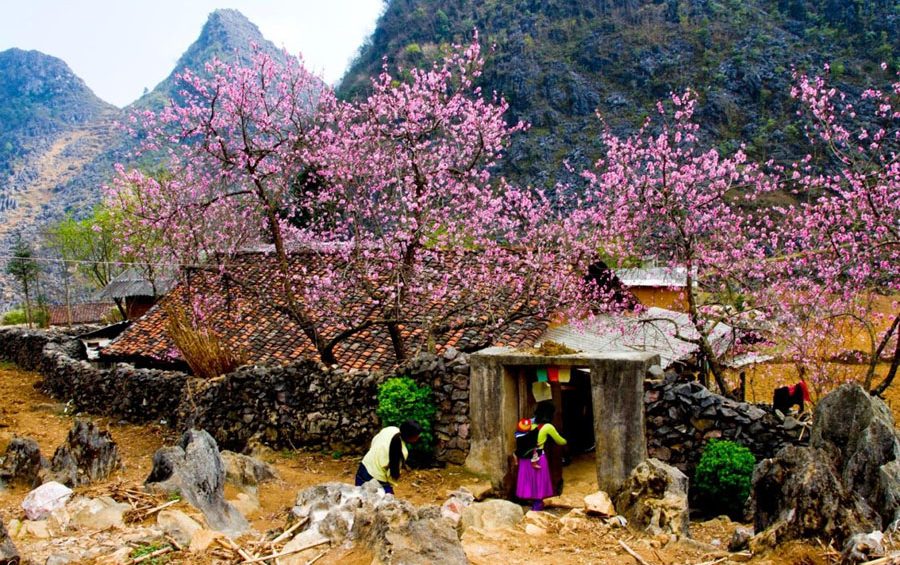
When the biting winter cold of northern Vietnam slowly softens into the gentle, sun-kissed breeze of early spring, Ha Giang undergoes a breathtaking transformation. It sheds its stark, rugged winter coat and turns into a living masterpiece. From late January through March, the stark limestone pinnacles of the Dong Van Karst Plateau Geopark awaken as millions of pink peach blossoms (hoa đào) and pure white plum blossoms (hoa mận) burst into vibrant life. They frame remote valleys, ancient stone-walled houses, and winding mountain trails in a wash of delicate pastel colors.
Unlike the bustling, heavily commercialized tourist hotspots in Vietnam’s lowlands, spring in Ha Giang offers an authentic, deeply soulful escape. It is a season when nature and human culture dance together in perfect harmony, welcoming travelers into an untouched world of timeless beauty.
1. The Magic of Ha Giang in Spring: What to Expect
Springtime in the northernmost frontier is characterized by cool, crisp mornings, brilliant blue skies, and warm midday sun. As the winter frost retreats, the earth comes alive. The hillsides are blanketed in a colorful mosaic: the deep pinks of blooming peach trees, the snowy whites of plum orchards, and the golden hues of early mustard flowers.
For photographers, road-trippers, and culture seekers, this is arguably the most magical time of the year to tackle the legendary Ha Giang Loop. Riding a motorcycle through mountain passes like Quan Ba, Yen Minh, and Dong Van while petals drift gently on the spring wind is an experience that stays with you forever.
2. Key Highlights and Best Spots for Flower Viewing
While almost every corner of Ha Giang boasts incredible scenery during spring, certain locations stand out as absolute must-visit spots:
Loo Lo Chai Cultural Village
Tucked away near the northernmost tip of Lung Cu, Loo Lo Chai is a picturesque village belonging to the Lo Lo ethnic minority. In spring, the earthen-walled houses with their yin-yang tiled roofs are dramatically framed by blooming peach and mustard flowers. Walking through this village feels like stepping straight into a fairytale. You can witness locals weaving traditional textiles, children playing bamboo games, and the warm hospitality of a community deeply rooted in its ancestral traditions.
The Valley of Tham Ma Pass and Sung La
Sung La Valley is widely considered the heartland of flowers in Ha Giang. Often featured in Vietnamese cinema (such as the famous film The Story of Pao), Sung La features sprawling plum orchards that burst into a sea of white blossoms. Surrounded by dramatic limestone karsts, traditional mud-brick homes with stone fences stand as silent witnesses to the passage of time. Nearby, the winding curves of Tham Ma Pass offer stunning elevated viewpoints to capture panoramic shots of the spring landscape below.
Dong Van Old Quarter and Sa Phin (The H’Mong King’s Palace)
As you journey deeper into the rocky plateau, the historic Dong Van Old Quarter takes on a festive charm. The ancient stone buildings are decorated with red banners and traditional items as locals prepare for spring celebrations. A short drive away, the historic residence of the H’Mong King in Sa Phin is surrounded by majestic ancient peach trees that bloom brilliantly against the dark fortress walls.
3. Immersing in Ethnic Spring Culture and Festivities
Spring in Ha Giang is not only about flowers; it is also the peak season for traditional festivals and vibrant highland markets (chợ phiên).
Following the Lunar New Year (Tet), highland communities gather at weekly markets like Khau Vai, Meo Vac, and Dong Van. These markets transform into bustling social hubs where ethnic groups—including the H’Mong, Dao, Tay, and Lo Lo—dress in their finest, most colorful handmade traditional costumes. It is a sensory feast of bright textiles, traditional foods, silver jewelry, and joyous laughter.
Travelers visiting during this period have a rare opportunity to witness traditional New Year rituals, shamanic ceremonies for a bountiful harvest, and folk games like nem con (tossing a sacred cloth ball) and traditional flute dancing.
4. Practical Tips for Your Spring Journey
-
Weather Preparation: While daytime temperatures are pleasant (around 15°C to 22°C), nights in the high mountains can still be quite chilly. Pack layers, windbreakers, and warm clothing for evening stops.
-
Choosing Your Adventure Style: Whether you prefer an independent Self-Ride motorcycle tour (if you have an International Driving Permit and strong mountain riding skills) or a secure Easy Rider tour (riding safely behind an expert local guide), booking a structured package ensures you don’t miss hidden valley trails.
-
Respect Local Customs: Spring is a sacred time of renewal for local families. Always ask for permission before taking close-up portraits of elders or children, and respect local customs when entering traditional homes.
5. Answer the Call of the Highlands
Spring in Ha Giang is fleeting, lasting only a few short weeks before the summer rains arrive. If you are yearning for a journey that awakens your senses, connects you with rich indigenous traditions, and takes you across some of Asia’s most majestic mountain roads, this is your moment.
Ready to witness the blooming magic of the northern frontier? Book our special Spring Cultural Ha Giang Loop Tour today and let our expert local guides lead you through an unforgettable celebration of nature and heritage!